Indianapolis Urban League

SB 368 : How Can You Help our Youth?

SB 368 : How Can You Help our Youth?

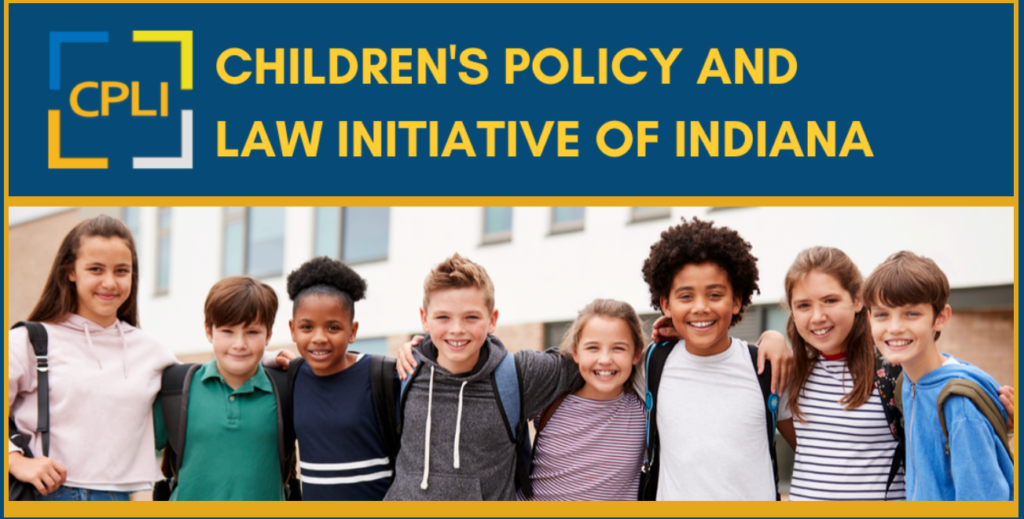
Childrens Policy And Law Initiative Of Indiana Image 4.5.21

How You Can Help?

Status: 
SB 368 has passed out of both House committees–Courts and Criminal Code, and Ways and Means. The bill now proceeds to 2nd and 3rd Reading this week, which is when the entire House will vote on the bill.

Action:  
We support this bill as critical legislation to advance youth justice in Indiana. Please share this email with your colleagues and friends, and contact your own state representative to vote for this bill.

Why: 
This legislation advances three issues for children: (1) Removal of children from adult jails while awaiting trial in the adult system; (2) Juvenile Competency to Stand Trial, so children with mental illness, disabilities or just too young, do not enter the juvenile justice system in order to access services; and (3) Automatic Expungement of juvenile misdemeanor records so that collateral consequences do not follow children, placing barriers to education, employment, joining the military, housing and other essential aspects of life.

SB 368 Juvenile Justice–authored by Sens. Karen Tallian (D), Jean Breaux (D), Sue Glick (R), and Jim Buck (R)—includes important policies designed to treat children in an age- and developmentally-appropriate manner, confront systemic racism, disrupt the school-to-prison pipeline, and protect children in the justice system from dangerous and overly punitive practices. Rep. Wendy McNamara (R), along with Reps. Greg Steuerwald (R), Matt Pierce (D) and Ragen Hatcher (D), are co-sponsors in the House.

There is still time to call or send an email to your Representative today.  Also, please take the time to thank those legislators mentioned above who have provided bi-partisan support to move this bill this session.

You can find the name and contact information for your legislator by visiting http://iga.in.gov/legislative/find-legislators/ or calling (317) 232-9600.

(April 5, 2021)


NATIONAL URBAN LEAGUE LAUNCHES COMPREHENSIVE PLAN TO ADDRESS RACIAL DIGITAL  INEQUITIES 

Nul Logo

AFTER COVID-19 PANDEMIC EXPOSES GAPS IN ACCESS TO RELIABLE BROADBAND IN COMMUNITIES OF COLOR, NATIONAL URBAN LEAGUE LAUNCHES COMPREHENSIVE PLAN TO ADDRESS RACIAL DIGITAL  INEQUITIES 

NEW YORK (March 30, 2021) — The National Urban League today announced a comprehensive strategy for leveraging the tools of the information economy to create a more equitable and inclusive society. The Lewis Latimer Plan for Digital Equity and Inclusion addresses gaps in access to broadband access that prevent some segments of the population from benefiting from the digital economy, which results in financial and educational inequalities.

“Now, more than ever, we need broadband access in every community across the nation,” said Marc H. Morial, President and CEO of the National Urban League. “The COVID-19 pandemic revealed the vast inequality in access to reliable broadband for students learning remotely and employees working from home. Gaps in broadband means that students fall behind their peers and small businesses fall behind their competitors—especially in communities of color.”

The Lewis Latimer Plan for Digital Equity and Inclusion will work towards deploying broadband networks everywhere in the country; connecting every household to broadband networks; effectively utilizing the networks to improve the delivery of essential services, and creating new opportunities for underserved communities to participate in the growth of the digital economy.

Specifically, the Plan provides recommendations on addressing multiple  key areas:

  • The Availability Gap: Millions of American homes and businesses are unable to connect to a home broadband internet connection because service is not available in their communities. Lack of an available in-home broadband connection prevents these communities from being able to fully participate in the economy, obtain education and health services, train, search, and apply for a job, and otherwise participate in society.
  • The Adoption Gap: Even among those Americans for whom a broadband internet connection is available, there are still tens of millions who have not subscribed to broadband service in their homes.
  • The Affordability Gap: For millions of Americans who do not subscribe to broadband, the cost of service remains a significant obstacle to adoption for many communities.
  •  The Access to Economic Opportunity and Participation Gap: The digital economy has created the greatest opportunity for wealth accumulation in history, but those opportunities are not being equitably distributed throughout society. The Utilization Gap: The full range of uses of broadband is not being leveraged to its fullest extent in regards to how we provide essential services, especially in the areas of workforce development, healthcare, and education.

The Plan was inspired by Lewis Howard Latimer, a 19th-century draftsman, soldier, scientist, and researcher whose parents were born into slavery. He worked with Alexander Graham Bell on the development of telephones and Thomas Edison on electric lighting. Unfortunately, while Latimer was a key contributor to Edison’s and Bell’s seminal wealth-creating inventions, he had no ownership stake in the vast businesses they spawned. That legacy must end now.

Under the Plan, the FCC would reexamine network performance standards, pinpoint areas without any broadband network, eliminate restrictions that disqualify providers who could deliver service quickly and efficiently, and allocate subsidies necessary to close the Availability Gap.

The Plan calls on the Department of Commerce and the FCC to collect information that allows the government and the public to understand and evaluate how the private sector is improving diversity, equity, and inclusion. It also recommends establishing a federal Office of Digital Equity to coordinate training and restructuring the FCC’s Lifeline Program, which subsidizes communication services for low-income households.

“Millions of Americans enjoy the access to information, entertainment, and commerce that broadband provides,” said Blair Levin, Nonresident Senior Fellow, Metropolitan Policy Program at the Brookings Institution. “But the unfortunate reality is that communities that lack access to broadband are the ones who could benefit from it the most. Our leaders need to step up and address the gaps that are holding back large segments of the population.”

The full Plan can be found here.

                                                                           ###

The National Urban League is a historic civil rights organization dedicated to economic empowerment in order to elevate the standard of living in historically underserved urban communities. The National Urban League spearheads the efforts of its 90 local affiliates through the development of programs, public policy research and advocacy, providing direct services that impact and improve the lives of more than 2 million people annually nationwide. Visit www.nul.org and follow us on Facebook, Twitter, and Instagram: @NatUrbanLeague.

###

CONTACT:  Teresa Candori, National Urban League tcandori@nul.org

Your Continued Support is Needed – Defend Public Transportation in Central Indiana (SB 141)

United Way Central Indiana Take Action Image Transit Bill 3.12.21

WE NEED YOUR CONTINUED ADVOCACY FOR PUBLIC TRANSPORTATION IN CENTRAL INDIANA!

(Tuesday, March 30, 2021) –  We need your continued advocacy to defeat Senate Bill 141. If enacted, SB 141 would seriously threaten public transportation funding in Central Indiana and halt progress on the Blue and Purple Rapid Transit Bus lines.

Last Wednesday SB 141 was heard in the House Roads and Transportation Committee. Many expressed opposition to the bill and the negative impact it would have on public transit in Central Indiana. The Indy Chamber, Indianapolis Airport Authority, Goodwill, and United Way of Central Indiana were just a few of the many organizations represented in opposition to the bill.

Upon hearing from constituents via email, phone calls, and testimony, Chairman Pressel decided to hold the bill rather than take a vote.
The committee members need to hear your voice to affirm that this bill should not move out of committee! We need to sustain the pressure and protect IndyGo’s plans to create a reliable, high-quality bus system that will triple high-frequency access to households in poverty and increase access to 115,000 jobs.
Use the links below to quickly and easily email and/or call members of the committee to urge them to vote no on SB141, should it be called to vote.

Write an Email Now 

Call Now

Visit Transit Drives Indy’s website to learn more.

Thank you for your continued action on this important issue.

Sincerely,
Anne Valentine
Vice President, Government Relations
United Way of Central Indiana

Uwci Vertical Logo

The Indianapolis Urban League is a United Way agency.

ACT TODAY – Defend Public Transportation in Central Indiana

United Way Central Indiana Take Action Image Transit Bill 3.12.21

WE NEED YOUR HELP DEFENDING PUBLIC TRANSPORTATION IN CENTRAL INDIANA!

We need your help to defeat Senate Bill 141, a bill that if enacted would seriously threaten public transportation funding in Central Indiana and halt progress on the Blue and Purple Rapid Transit Bus lines.

In late February, Senate Bill 141 was approved by the Senate 32 – 17 and has moved on to the House Roads and Transportation Committee. In partnership with Transit Drives Indy, we are pushing to keep the bill from advancing out of committee. As such, I am writing today to ask you to join us in contacting Speaker Todd Huston, Committee Chair Jim Pressel, and the House bill sponsors, Reps. Bob Behning and Mike Speedy, to tell them why reliable, quality public transportation is important to you and the Central Indiana community.

Use the links below to call and/or write an email to Speaker Huston, Chairman Pressel, Rep. Behning, and Rep. Speedy to urge them to stop SB 141 from advancing in the House. By using the links below, you will be provided with the phone number and talking points for the call and a pre-written suggested message for the email.

Call Now
Write an Email Now

Visit Transit Drives Indy’s website and read the letter signed by human service organizations within UWCI’s community partner network sent to Huston, Pressel, Behning, and Speedy on March 10 to learn more.

Thank you to everyone who took action to oppose Senate Bill 141 when it was in the Senate. We must keep up the pressure to defeat this bill in the House and prevent it from becoming law.
Sincerely,
Anne Valentine
Vice President, Government Relations
United Way of Central Indiana

Uwci Vertical Logo

The Indianapolis Urban League is a United Way agency.

FOR THE PEOPLE ACT – SENATE MUST ACT TO PROTECT AMERICAN DEMOCRACY FROM UNPRECEDENTED ATTACKS

Nul Logo

SENATE MUST ACT TO PROTECT AMERICAN DEMOCRACY FROM UNPRECEDENTED ATTACKS

(NEW YORK – March 4, 2021) – National Urban League President and CEO Marc H. Morial issued the following statement regarding the passage of H.R. 1 in the House of Representatives:

“We have watched in dismay as state lawmakers around the country responded to record turnout among voters of color with aggressive, racially-motivated restrictions on voting.  The House of Representatives admirably stood against this anti-democracy movement last night by passing a sweeping expansion of voting rights contained in the For the People Act. Now the Senate must do the same.

“Just this week, an attorney representing some of the anti-democratic state lawmakers stood before the United States Supreme Court and made an astonishing admission: the reason they seek these restrictions isn’t large-scale voter fraud, which is non-existent, but a blatant partisan power grab.  Nothing could illustrate the crisis we face more succinctly.

“If we truly value a government of the people, by the people, and for the people; if we are committed to the principle of one person one vote regardless of party affiliation; if we expect to realize the promise of racial equity under the law, immediate passage of the For The People Act is critical.”

CONTACT:  Teresa Candori, National Urban League tcandori@nul.org

National Urban League Hails House Passage of GEORGE FLOYD JUSTICE IN POLICING ACT; DEMANDS IMMEDIATE SENATE ACTION

Nul Logo

NATIONAL URBAN LEAGUE HAILS HOUSE PASSAGE OF GEORGE FLOYD JUSTICE IN POLICING ACT; DEMANDS IMMEDIATE SENATE ACTION

NEW YORK (March 4, 2021) – National Urban League President and CEO Marc H. Morial issued the following statement regarding the passage of the George Floyd Justice in Policing Act in the House of Representatives:

“Last summer, as millions of Americans marched in the streets to demand an end to racial injustice, the National Urban League made a commitment to turn ‘protest into power.’  Last night’s passage of the George Floyd Justice in Policing Act is a major step on that journey. Now, the Senate must demonstrate its commitment to racial justice and integrity in policing and send the bill to President Biden’s desk.

“The George Floyd Justice in Policing Act would create a culture of accountability, establish high standards of proficiency and ethics for the profession, restore the public’s trust in law enforcement, and enhance the relationship between honorable police officers and the communities they serve.

“Every day that goes by without putting these reforms into action is a day when American men, women and children of color remain at risk of racially-motivated violence and injustice. The American people overwhelmingly approve of these reforms. They marched in the street to demand these reforms. They voted for the candidates who are committed to these reforms. They have waited too long already.”

Read  more CIVIL RIGHTS LEADERS CALL ON CONGRESS TO PASS GEORGE FLOYD JUSTICE IN POLICING ACT

###

CONTACT:  Teresa Candori, National Urban League tcandori@nul.org

PASSING OF FORMER PRESIDENT VERNON JORDAN

Nul Logo

NATIONAL URBAN LEAGUE GRIEVES THE PASSING OF

FORMER PRESIDENT VERNON JORDAN

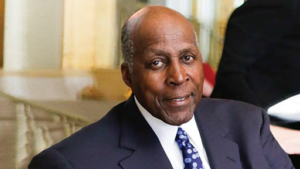
Vernon Jordan

NEW YORK (March 2, 2021) –  National Urban League President and CEO Marc H. Morial today issued the following statement in response to the passing of his predecessor, Vernon Jordan:

“The nation has lost one of its greatest champions of racial and economic justice.  He was a transformational leader who brought the movement into a new era.  He was a personal mentor and dear friend. His passing leaves a tremendous void that can never be filled.

“Vernon assumed leadership of the National Urban League at a crucial moment in history, after the passage of the Civil Rights Act, the Voting Rights Act, and the Fair Housing Act.  The broad, legal goals of the 20th Century Civil Rights Movement had been achieved. His mission, as he saw it, was to empower Black Americans to realize the promise of these victories.  In his words, “Black people today can check into any hotel in America, but most do not have the wherewithal to check out.”

“The exceptional poise and dignity with which he carried himself was just as striking as his impressive height.  Born into an era when Black men were routinely addressed as “Boy,” Vernon’s mother pointedly nicknamed him “Man.”  He honored her faith in him with his bravery, his grace, his brilliance and his excellence.

“The National Urban League would not be where it is today without Vernon Jordan. We have lost more than a leader; we have lost a brother. We send our prayers to his wife, Ann, his daughter, Vickee, and his entire family and extended family as we rededicate our commitment to his vision of justice and equality.”

CONTACT:     Teresa Candori, tcandori@nul.org

Civil Rights Leaders Call on Congress to Pass George Floyd Justice in Policing Act

Nul Logo

CIVIL RIGHTS LEADERS CALL ON CONGRESS TO PASS GEORGE FLOYD JUSTICE IN POLICING ACT

NEW YORK (February 24, 2021) – Today, civil rights leaders called on the U.S. House of Representatives to pass the George Floyd Justice in Policing Act – a critical step to holding law enforcement accountable for unconstitutional and unethical conduct. The 2020 killing of George Floyd sparked a year of national protests in all 50 states calling for an end to police brutality against Black and Brown communities and a demand for accountability in every sector of law enforcement.

Addressing this nation’s history of violent, discriminatory policing requires passing legislation that advances systemic reforms rooted in transparency and accountability. It is the responsibility of the federal government to set standards on justice, policing, and safety. A vital step in this process is the passage of the George Floyd Justice in Policing Act, which recognizes the importance of stripping law enforcement of qualified immunity; creating a national registry of police misconduct complaints; declaring prohibitions for law enforcement profiling; limiting the transfer of military-grade equipment to state and local law enforcement; and restricting funds from law enforcement agencies that do not prohibit the use of chokeholds.

“The killing of George Floyd held a mirror up to a truth about the American legal system. It showed us in the most stark and irrefutable way, that there are deep, fundamental problems with how this country allows law enforcement to intimidate, abuse, torture, and kill unarmed Black people. Among the powerful reasons Americans were moved to action in the wake of the killing of George Floyd was watching Derek Chauvin’s reaction to being recorded. He stared at us with his hand in his pocket, believing that nothing was going to happen to him, that he would face neither criminal penalty nor civil liability,” said Sherrilyn Ifill, President and Director-Counsel of the NAACP Legal Defense and Educational Fund, Inc. (LDF). “The George Floyd Justice in Policing Act is focused, first and foremost, on addressing the regime of impunity that has allowed police officers for decades to kill innocent Black men, women, and children without accountability. If Congress fails to act to pass the George Floyd Justice in Policing Act, it will prove Derek Chauvin right. It will reinforce that in encounters with Black people, law enforcement officers are above the law. When Officer Chauvin looks into the camera as he kills George Floyd, he is looking at us. He is daring us to prove him wrong. We’re calling on Congress to prove him wrong and move forward the George Floyd Justice in Policing Act.”

“Excessive, deadly force against Black Americans runs deeper than the tragic death of George Floyd. The United States’ use of brutal police force to control Black Americans can be traced back to slave patrols of the 1700s and the Black codes of the 1860s-1870s. Now it’s time for Congress to pass the Justice in Policing Act to ensure that no person under color of law can act unilaterally as cop, judge, jury, and executioner in this country. The previous Congress failed to do its job. This Congress must meet the challenge of today and send this important piece of legislation to the President’s desk,” said Marc H. Morial, President & CEO, National Urban League.

“The lynching by knee of a law enforcement officer of George Floyd is to this generation of civil rights what the lynching of Emmitt Till was to the generation of our grandparents. Therefore, the passing of the George Floyd Justice and Policing Act is as important in this time as the Civil Rights Act of 1964 and the Voting Rights Act of 1965 was in the era of the civil rights movement of the ‘50’s and ‘60’s. The Senate must act now as the Senate acted in that time. A vote against that is a vote against civil rights and the passage of this will send a message that police lynchings will not be tolerated and the accountability on all policing must be the law of the land,” said Rev. Al Sharpton, Founder and President of National Action Network.

“Congress must understand the urgency in immediately passing The George Floyd Justice in Policing Act. Our Black Women’s Roundtable/Essence 2020 Poll and our NCBCP Unity 2020 Election Exit Poll revealed that criminal justice/policing reform was one of the top-three issues that Black voters – especially Black women and young voters – wanted the next President and Congress to address. (The poll also revealed that eradicating systemic racism was the #1 issue, while ending COVID-19 was number #3). The voters have spoken and now is the time for the Congress to deliver what the people voted for and pass the George Floyd Justice in Policing Act,” said Melanie L. Campbell, President and CEO of National Coalition on Black Civic Participation. “Further, as our nation deals with multiple crises during a deadly pandemic, it is important to also understand that these issues are a matter of life and death to millions of people of color and impoverished communities that are unfairly treated by too many in law enforcement in our nation.”

“For many of us, the searing pain on display in Minneapolis and across the country last summer has not gone away – and those who have lost their lives to state violence deserve more,” said Wade Henderson, interim president and CEO of The Leadership Conference on Civil and Human Rights. “Yet, for too long, our nation has met the cycle of police brutality and racism with tinkering at the edges instead of real change. To be clear, we cannot and will not accept an incremental approach to justice nor go through this cycle over and over again. Now is the time to take this meaningful step to reimagine what kind of America we want to build — an America where all people can live safely and freely. We urge members of the House to support passage of the George Floyd Justice in Policing Act, and for Senate leadership to take it up in short order and work to strengthen it.”

“There is a very long history of systemic racism against Black women, men and children by individual white supremacists and by state-sanctioned acts that began during the years of enslavement and continued during the period of reconstruction and Jim Crowism. Such violence continues to plague our communities. Today there are clear and irrefutable acts of police violence that are exemplified by the killing of George Floyd,” said Dr. Johnnetta Betsch Cole, National Chair and President of the National Council of Negro Women, Inc. “The passage of the George Floyd Act is an urgent and necessary action to end unjustified police killings of Black women, men and children.”

“The George Floyd Justice in Policing Act seeks to hold our system of justice accountable at a time when transparency and liability are lacking,” said Derrick Johnson, President and Chief Executive Officer of the National Association for the Advancement of Colored People. “We’ve witnessed far too many deaths at the hands of law enforcement with little to no recourse. It is long overdue that we reimagine public safety in our communities and rethink policing; this piece of legislation aims to do just that. “

“In order to make meaningful progress on the urgent need for transparency and accountability for police misconduct, we need the Justice in Policing Act now more than ever. America is still confronted with a national crisis of unchecked police violence. Police are still killing unarmed Black people at alarming rates. Time and time again we see these inexplicable tragedies and atrocities, followed by predictable outrage and condemnation, but little else.  Some things seem to have changed in this country in terms of public discourse and consciousness about the problem.  Yet, our federal laws have not changed accordingly. Passing this legislation will force our nation to finally acknowledge and begin to address this potent form of systemic discrimination faced by Black communities nationwide,” said Damon Hewitt, Executive Vice President, Lawyers’ Committee for Civil Rights Under the Law.

###

About the NAACP Legal Defense and Education Fund, Inc.

Founded in 1940, the NAACP Legal Defense and Educational Fund, Inc. (LDF) is the nation’s first civil and human rights law organization. LDF has been completely separate from the National Association for the Advancement of Colored People (NAACP) since 1957—although LDF was originally founded by the NAACP and shares its commitment to equal rights. LDF’s Thurgood Marshall Institute is a multi-disciplinary and collaborative hub within LDF that launches targeted campaigns and undertakes innovative research to shape the civil rights narrative. In media attributions, please refer to us as the NAACP Legal Defense Fund or LDF. Follow LDF on TwitterInstagram and Facebook.

 About the National Urban League

The National Urban League is a historic civil rights organization dedicated to economic empowerment in order to elevate the standard of living in historically underserved urban communities. The National Urban League spearheads the efforts of its 90 local affiliates through the development of programs, public policy research and advocacy, providing direct services that impact and improve the lives of more than 2 million people annually nationwide. Visit www.nul.org and follow us on Twitter and Instagram: @NatUrbanLeague.

About the National Action Network

National Action Network is one of the leading civil rights organizations in the Nation with chapters throughout the entire United States. Founded in 1991 by Reverend Al Sharpton, NAN works within the spirit and tradition of Dr. Martin Luther King, Jr. to promote a modern civil rights agenda that includes the fight for one standard of justice, decency and equal opportunities for all people regardless of race, religion, nationality or gender. For more information go to www.nationalactionnetwork.net.

 About the National Coalition on Black Civic Participation

The National Coalition on Black Civic Participation (NCBCP), founded in 1976, is one of the most active civil rights and social justice organizations in the nation “dedicated to increasing civic engagement, economic and voter empowerment in Black America.” The Black Women’s Roundtable (BWR) is the women and girls empowerment arm of the NCBCP. At the forefront of championing just and equitable public policy on behalf of Black women, BWR promotes their health and wellness, economic security & prosperity, education and global empowerment as key elements for success. Visit www.ncbcp.org and follow us on Twitter @ncbcp and Instagram @thenationalcoalition.

About The Leadership Conference on Civil and Human Rights

The Leadership Conference on Civil and Human Rights is a coalition charged by its diverse membership of more than 220 national organizations to promote and protect the rights of all persons in the United States. The Leadership Conference works toward an America as good as its ideals. For more information on The Leadership Conference and its member organizations, visit www.civilrights.org.

 About the National Council of Negro Women, Inc.

National Council of Negro Women, Inc. (NCNW) is a Washington, D.C.-based charitable organization making a difference in the lives of women, children, and families through a four-pronged strategy that emphasizes entrepreneurship, health equity, STEAM education, and civic engagement. Founded 85 years ago, NCNW has 300 community and campus-based sections and thirty-two national affiliates representing more than Two Million women and men. NCNW’s programs are grounded on a foundation of critical concerns known as Four for the Future. NCNW promotes education with a particular focus on science, technology, engineering, and math; encourages entrepreneurship, financial literacy, and economic stability; educates women about good health and HIV/AIDS; promotes civic engagement and advocates for sound public policy and social justice. NCNW is known for its work to educate college age women about HIV/AIDs and for producing the Black Family Reunion. Current programs include GirlTech, HBCU College Fair, Millennial Entrepreneurs and Adulting 101. Johnnetta Betsch Cole, Ph.D., is the National Chair and Seventh President of NCNW. NCNW has campaigned for clean water for Flint, MI, voting rights, and SNAP benefits. For more information please visit www.ncnw.org or NCNW’s social channels via FacebookTwitterInstagram or LinkedIn.

 About the NAACP

Founded in 1909, the NAACP is the nation’s largest and foremost grassroots civil rights organization. The mission of the NAACP is to secure the political, educational, social, and economic equality of rights in order to eliminate race-based discrimination and ensure the health and well-being of all persons. Members throughout the United States and the world are the premier advocates for civil rights and social justice in their communities. You can read more about the NAACP’s work by visiting www.naacp.org.

 About The Lawyer’s Committee for Civil Rights Under Law

The Lawyers’ Committee for Civil Rights Under Law, a nonpartisan, nonprofit organization, was formed in 1963 at the request of President John F. Kennedy to involve the private bar in providing legal services to address racial discrimination. Now in its 57th year, the Lawyers’ Committee for Civil Rights Under Law is continuing its quest to “Move America Toward Justice.” The principal mission of the Lawyers’ Committee for Civil Rights Under Law is to secure, through the rule of law, equal justice for all, particularly in the areas of criminal justice, fair housing and community development, economic justice, educational opportunities.

Indiana Black Legislative Caucus Calls for Racial Equity, Implicit Bias Training, and Reprimands for Disrespect

Email Header Iblc New

IBLC calls for racial equity, implicit bias training, and reprimands for disrespect

INDIANAPOLIS (February 23, 2021) – State Rep. Robin Shackleford (D-Indianapolis) and members from the Indiana Black Legislative Caucus (IBLC) held a press conference today to discuss their recommendations to the Speaker of the House in response to last week’s disrespectful behavior from Republican legislators during discussion of House Bill 1367.

The IBLC outlined three specific recommendations to the Speaker:

  1. Swift reprimands to the House legislators involved in the altercations last week.
  2. Mandatory racial equity and implicit bias training for all House legislators, so they may gain a better understanding of systemic racism and the role everyone plays.
  3. Assurance that the utmost safety precautions will be taken for all House legislators during the legislative session.

The IBLC first called for these actions in a statement released immediately after last week’s incidents.
“We as lawmakers have a responsibility to address concerning legislation, but cannot do so effectively unless legislators are able to be objective and separate their personal feelings from their legislation,” Shackleford explained.

“Just because we’re saying that a specific policy is discriminatory does not mean we are calling that author ‘racist.’ Racism and implicit bias training would be the first step toward that understanding.”

Reps. Gregory W. Porter (D-Indianapolis), Cherrish Pryor (D-Indianapolis), House Democratic Leader Phil GiaQuinta (D-Fort Wayne), and Shackleford met with the Speaker and his leadership team on Monday (Feb. 22) but did not receive a commitment from him on reprimands or training.

“To move forward, we need to acknowledge and address what happened. We can’t just sweep it under the rug,” Shackleford said.

You can view a video of the IBLC press conference at this link.

Recent Actions of Legislators Against Indiana Black Legislative Caucus Members -AACI Statement

Iul Logo Nul

African American Coalition Of Indianapolis Logo

AACI Statement on Recent Actions of Legislators Against Indiana Black Legislative Caucus Members

INDIANAPOLIS – (February 19, 2021) We are appalled at the disrespectful treatment of members of the Indiana Black Legislative Caucus (IBLC) during the legislative debate on HB 1367. At a time when we should be advancing public policies that afford equal opportunities to individuals and communities, we have spent several weeks opposing numerous bills designed to exacerbate such inequities.

The entire tone of this legislative session has raised serious concerns about whether Black Hoosiers can be treated equally in this state. We have seen proposed cuts to mental health, education bills that continue to unlevel the playing field for urban and underrepresented students, no additional funding for food deserts, undermining of tenant protections during an economic decline and pandemic, and efforts to undue community-based solutions for police reform. The Republican delegation, even while claiming to propose solutions for Indianapolis and its urban core, has made no effort to engage our community—even on the issues that disproportionately impact our community.

Nationally, we have noted the rise of racism and its normalization. We stand in solidarity with the Indiana Black Legislative Caucus and all legislators that fight for both root cause solutions and against policies that maintain systemic racism in our society. We expect that the Speaker of the House and President Pro Tempore set a tone of civility and enforce it among the members of the Indiana General Assembly.

African American Coalition of Indianapolis

 _______________________________________

About the African American Coalition

The African American Coalition of Indianapolis (AACI) is a non-partisan collaboration of African-American civic, social, professional, service and community organizations with a goal to educate and engage African Americans in the local, state and national political process.