Indianapolis Urban League

Ahead of Senate Vote on Anti-DEI Bill in Education, Indiana Coalitions Sound Alarm on Censorship & Discrimination

Ahead of Senate Vote on Anti-DEI Bill in Education, Indiana Coalitions Sound Alarm on Censorship & Discrimination

Ahead of Senate Vote on Anti-DEI Bill in Education,

Indiana Coalitions Sound Alarm on Censorship & Discrimination

Republican-led S.B. 289 absorbed S.B. 235 narrowly before its 2nd reading,

rendering 235 amendments obsolete according to ‘germane’ rule

INDIANAPOLIS — The Indiana Senate is set to vote Thursday on Senate Bill 289,‘Nondiscrimination in employment and education.’ This bill regurgitates proposed federal, anti-DEI legislation and would impact state agencies, school corporations, and universities by increasing the administrative burden for nondiscrimination programs, prohibiting requiring certain kinds of training, and eliminating their DEI programs and practices. Additionally, if enacted, this bill would limit how companies who receive state contracts can pay for DEI training and limit DEI programs at certain health organizations.

In a last-minute, legislative sleight-of-hand, the Indiana Senate merged S.B. 235 into S.B.289, creating a single sweeping bill that eliminates DEI programs, censors discussions on race and gender, and shuts down efforts to address systemic discrimination. By invoking procedural rules, they silenced amendments for S.B. 235, forcing the Senate into an all-or-nothing vote on a radical censorship measure.

During discussion, Senator Shelli Yoder condemned the merger, stating: “It is a bad precedent to take a bill and amend it into another bill when other amendments addressing both were already proposed,” Senator Yoder explained. “The amendments for 235 will now most likely never be heard and we wanted to be able to debate both policies and good policies for the state of Indiana.”

Senator Andrea Hunley, who proposed amendments to make the bill less burdensome on teachers, implored her Republican colleagues to hear the extremism of the bill as written. “Our educators would have to post all instructional and curriculum materials that deal with nondiscrimination, diversity, equity, inclusion, race, ethnicity, sex, and bias – which are not defined in this bill – already causing confusion.”

Senator Hunley continued by citing an example of an existing state standard in Indiana.

One of the required lessons in high school History is to be able to describe and assess President Benjamin Harrison’s contributions to national policies on environmental protections, business regulations, immigration, and civil rights…How can you teach that standard without talking about race?

This misguided piece of legislation would impact a wide range of Hoosier community members, including faculty, staff, and students of universities, school corporations and charters, as well as employees of state agencies. The choice to combine S.B. 235 and S.B. 289 shut Hoosier citizens’ out of the civic process, with many of the constituents opposing the legislation citing concerns over extreme censorship the bill would cause in the state’s struggling education system.

“Erasing discussions of systemic inequality dismantles efforts across Indiana to move toward inclusive, culturally responsive environments for our youth, perpetuating negative representations of our history and hides uncomfortable truths,” Meisha Wide, Executive Director of the Children’s Policy and Law Initiative of Indiana (CPLI) said. “It is a blatant attempt to take Indiana backward by silencing the voices that support marginalized members of our community.”

“The bill combines the worst aspects of its predecessors – it’s not about fairness or neutrality—this is state-sanctioned censorship,” Dr. Russ Skiba, leader of University Alliance for Racial Justice (UARJ) added. “Banning discussions about systemic racism and oppression sends a clear message from lawmakers to their constituents: they do not want an informed, inclusive, or honest Indiana.”

States that have passed similar laws—like Florida and Texas—have already faced corporate backlash, faculty resignations, and lawsuits. Indiana is now on the same path. Business leaders have warned that suppressing diversity makes the state less competitive, pushing away talent, investments, and economic growth.

“Our mission is to cultivate and maintain that world-class environment for businesses to operate and contribute to that economic growth and prosperity for the state,” Indiana Chamber’s President and CEO Vanessa Green Sinders said in a June 2024 Inside Indiana Business interview. “We prioritize attracting, retaining, training, (and) supporting our workforce. Having a diverse workforce and thinking through these issues is something[our members] care a lot about.”

The Indy Chamber’s 2025 Legislative Priorities cites sobering statistics for the already-dwindling state of Hoosier labor resources.

Indiana faces a critical talent gap, with 140,000 unfilled jobs today and only 110,000additions to the skilled workforce projected between 2025 and 2050. Despite being a top 10 importer of college students, the state struggles with retention, losing34,000 graduates annually within a year of degree completion, placing it in the bottom 10 nationally.

Senate Bill 289 will receive its third and final reading this Thursday, February 6, 2025 at1:30 PM—and it could pass if Hoosiers don’t take action. Indiana cannot afford to be on the wrong side of history—again. Here’s what Hoosiers can do now:

  • Call your legislators and demand they vote NO on this dangerous bill.
  • Show up to the Statehouse Thursday to protest the final vote.
  • Spread the word on social media – share why this bill is bad for Indiana.

The time to act is now. Indiana cannot afford to be on the wrong side of history – again.

National Urban League President Marc H. Morial comes to Indy for Economic Club Luncheon

Join the Indianapolis Urban League for an engaging event at

The Economic Club of Indiana luncheon series.

This month’s speaker is the

President of the National Urban League, Marc H. Morial.


Save the date!

Tuesday, February 4, 2025

Get ready for a luncheon filled with stimulating conversations and delicious food.

Reserve your seat, tickets and more info at: https://ow.ly/QBE350UOQBp

#EconLunch #EconClubIN #Indianapolis #Indiana #CivilRights

Marc H. Morial – President, National Urban League

About this month’s speaker:

As President of the National Urban League since 2003, Marc H. Morial has been the primary catalyst for an era of change and a transformation for the 100-plus-year-old civil rights organization. His energetic and skilled leadership has expanded the League’s work around an empowerment agenda, redefining civil rights in the 21st century with a renewed emphasis on closing the economic gaps between Whites and Blacks and rich and poor Americans.

Under his stewardship, the National Urban League has had record fundraising success and secured the Better Business Bureau nonprofit certification, establishing the National Urban League as a leading national nonprofit organization. He presided over the League’s centennial celebration in 2010, ushering in a new century of service and establishing empowerment goals for every division across the League and its affiliates. Morial’s creativity has led to initiatives such as the Urban Youth Empowerment Program, which assists young adults in securing sustainable jobs, and Entrepreneurship Centers in five cities to help the growth of small businesses. He also created the National Urban League Empowerment Fund, which has pumped almost $200 million into urban impact businesses, including minority businesses, through debt and equity investments. During the COVID-19 pandemic, Morial led the Urban League in sounding the alarm about the racially disparate impact of the burgeoning coronavirus crisis, commencing an intense advocacy and direct relief campaign later to be called The Urban League Fights For You. Under his leadership, NUL also responded to the murder of George Floyd with advocacy, organizing, and policy actions, including 21 Pillars for Redefining Public Safety and Restoring Public Trust, a framework for criminal justice advocacy.

Perhaps one of Morial’s most significant contributions to the National Urban League’s legacy is the Urban League Empowerment Center in Harlem. The $242 million, 414,000-square-foot Urban League Empowerment Center is one of the most significant economic development projects in Harlem’s recent history – and a return home for the League that was founded in Harlem in 1910. The Center will serve as the headquarters for the National Urban League and be home to the Urban Civil Rights Museum Experience, New York City’s first civil rights museum, and the National Urban League Institute for Race, Equity, and Justice. The Center will also bring 170 affordable housing units to Harlem, below-market office space for nonprofits and community groups, including One Hundred Black Men of New York, United Negro College Fund New York, and the Harlem-based Jazzmobile, and retail space featuring Target and Trader Joe’s.

To Be Equal is a syndicated weekly opinion column distributed by the National Urban League to news outlets across the nation since 1963, when it was started as “the Voice of Black America” by National Urban League President, Whitney M. Young, Jr. The column has been authored by Marc H. Morial since 2003.

Biography Source: https://nul.org/

Purchase your ticket, mark your calendar, and plan for a stimulating conversation, and network during a delicious lunch.


GET THE FACTS: The What, The Why, and The How of Diversity, Equity, and Inclusion

Nul Logo

The Indianapolis Urban League and the National Urban League

want you to know the facts about Diversity, Equity, and Inclusion 

The Facts About Diversity Equity and Inclusion

Diversity is and will always be one of America’s greatest strengths: A diverse America is an
innovative and prosperous America.
Diversity is not about lowering standards or giving unfair advantages.
Diversity is about merit.
Diversity fosters unity, belonging, and opportunity in workplaces, schools, and communities.
Diversity brings a wide range of voices and perspectives, driving innovation and progress.
Diversity, Equity, and Inclusion are the foundation of the American Dream, benefitting
individuals, communities, and the nation.
Diversity is about securing America’s future: a future where innovation thrives, prosperity is
shared, and our collective strength as a nation is amplified through the contributions of all.

What is Diversity, Equity, and Inclusion (DEI)?

Diversity, equity, and inclusion are core American values and principles rooted in our nation’s history
of advancing “liberty and justice for all.” Diversity is supported by most Americans: 81% of
Americans believe that companies should reflect the racial diversity of the nation.
(Harris Poll/Black Economic Alliance Foundation)

  • Diversity includes differences based on characteristics such as race, gender, sexual
    orientation, age, ability, veteran status, income, and more.
  • Equity ensures the fair, just, and impartial treatment of all individuals whereby everyone has
    equal access to opportunities.
  • Inclusion focuses on creating environments where all people feel welcomed, respected,
    valued, and can contribute their talents and ideas freely.

Does Diversity, Equity, and Inclusion lower standards?

Diversity, equity, and inclusion are NOT about lowering standards; the focus is on ensuring that all
who have merit have opportunity. In practice, diversity, equity, and inclusion programs remove
barriers to create equal opportunities for everyone.

Are Diversity, Equity, and Inclusion programs just quotas?

No. Diversity, equity, and inclusion programs are not quotas. Quotas are prohibited in employment,
education, and other sectors. Quotas are illegal, but setting measurable goals are not. Instead,
diversity, equity, and inclusion programs focus on setting measurable goals, which are common in
business for driving progress. American businesses set goals for everything they do – earnings,
share price, growth rate – what gets measured gets done. Goals ensure accountability and help
create equitable opportunities without dictating hiring decisions or outcomes.

When the Supreme Court ruled against affirmative action in college admissions, did that
decision make Diversity, Equity, and Inclusion programs illegal?

No. The Supreme Court ruling on affirmative action in Students for Fair Admissions v. Harvard/ UNC
specifically addresses the consideration of race in college admissions decisions at those two schools
for qualified applicants – only. There is nothing unconstitutional about employer diversity, equity,
and inclusion programs or training programs, corporate or government commitments to racial
equity or diversity, targeted recruitment programs for underrepresented groups, or business goals
to improve diversity in contracting. Diversity, equity, and inclusion programs create opportunities,
promote fairness, and drive progress by fostering a broad range of talent and perspectives in
workplaces, schools, and communities.

Why is Diversity, Equity, and Inclusion essential for America’s economic success?

  • Diversity, equity, and inclusion drives innovation, increases productivity, and unlocks the full
    potential of our workforce.
  • Studies show that companies with workforces that are diverse on multiple levels, including
    by race, are more innovative, productive, and profitable.
  • A report by Accenture found that non-inclusive workplace cultures cost American
    companies $1.05 trillion annually, primarily due to high turnover, low productivity, and low
    employee engagement.
    • A 2020 study by Citi estimates that the United States would have gained $16 trillion dollars
    in Gross Domestic Product (GDP), if we had closed racial gaps in wages, access to higher
    education, lending, and mortgage access between 2000 and 2020. Similarly, a 2021
    Brookings study found that U.S. GDP would have been $22.9 trillion higher from 1990 to
    2019 if opportunities and outcomes were more equally distributed by race and ethnicity.

Do businesses who focus on Diversity, Equity, and Inclusion lose profits?

No. More diversity means more profit. McKinsey’s latest research showed that in 2023 the bottom
25% of large firms in terms of ethnic diversity underperformed their peers by 24% and the top 25%
overperformed by 27%. Furthermore, the bottom 25% of firms by gender diversity underperformed
their peers by 31% and the top 25% overperformed by 18%.

Is “DEI” under attack?

Despite widespread support to advance racial and economic mobility for all, opponents of diversity,
equity, and inclusion have distorted its purpose, using online intimidation and racist rhetoric
reminiscent of segregationist eras.

  • At least 80 bills in more than 30 states target diversity, equity, and inclusion training in
    education. Since 2023, at least 250 bills have been introduced to restrict diversity, equity,
    and inclusion in government, and over 200 bills across 36 states aim to ban diversity, equity,
    and inclusion practices in the private sector, with at least 16 states enacting laws
    (Movement Alliance Project).
  • Opponents have filed lawsuits against companies funding scholarships for students, pushed
    for book bans erasing American history, and pressed companies to rollback efforts to attract
    the best talent and secure the most innovative and qualified suppliers. These regressive and
    archaic attacks seek to take us backwards, preserving economic inequality instead of
    expanding access and inclusion, undermining opportunity instead of creating fair
    opportunities for all, and promoting division instead of fostering unity and progress.

Why does America still need Diversity, Equity, and Inclusion programs?

America still needs diversity, equity, and inclusion programs because they are essential to securing
our nation’s strength and leadership in an increasingly competitive world. As the world’s largest
economy, America’s success means ensuring equal opportunity for everyone, unlocking the full
potential of our diverse talent and perspectives to drive progress well into the 21st century.

  •  Diversity, equity, and inclusion policies are aimed at eliminating recognized disadvantages,
    not creating them. History has shown that without clear and specific guidelines that
    encourage diversity and inclusion, institutions continue discriminatory and exclusionary
    patterns that hold us all back.
  • In Fiscal Years 2022 and 2023, the U.S. Department of Education reported the most civil
    rights complaints in its history, most of which allege discrimination on the basis of race, sex,
    or disability.
  • Black and Hispanic-owned businesses continue to face discrimination and bias in lending,
    are charged higher interest rates (3.09% more and 2.91%, respectively), and on average
    Black, Hispanic, and Asian American owned businesses paid $8 billion more in annual
    interest than white-owned firms.
    (Source: Foster Consulting and Business Development Center, University of Washington)
  • Black, Hispanic, and women workers face continued disparities in earnings, leadership roles,
    and workplace segregation. According to data pulled by the Legal Defense Fund, National
    Employment Law Project, Southern Poverty Law Center, and the Lawyers’ Committee for
    Civil Rights Under the Law, “Black people remain relegated to lower wage jobs and less
    lucrative industries compared to white people with similar levels of education. The most
    common occupation for white workers in 2019 was in management (at a median hourly
    wage of $32.69), while Black workers were most commonly employed as cashiers (at a
    median hourly wage of $9.62) and Latinx workers most commonly worked as construction
    laborers (at a median hourly wage of $13.90).”
  • Black and Latino workers face higher unemployment rates and lower wages than white
    workers.

Indianapolis Urban League and the AACI Request a Response from the Indianapolis Public School Board of Commissioners

THE INDIANAPOLIS URBAN LEAGUE AND

THE AFRICAN AMERICAN COALITION OF INDIANAPOLIS 

REQUEST A RESPONSE FROM

THE INDIANAPOLIS PUBLIC SCHOOL BOARD OF COMMISSIONERS

IPS Board of Commissioners,

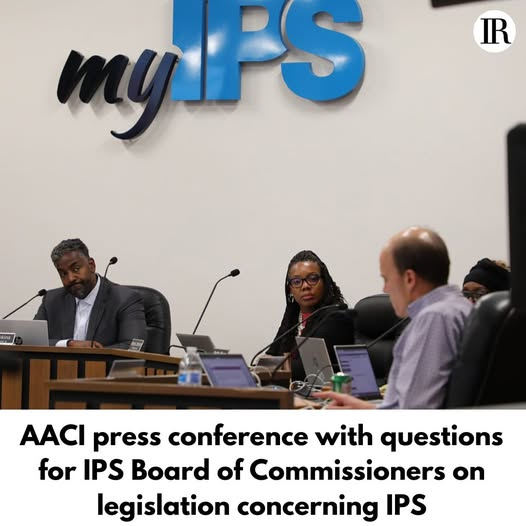
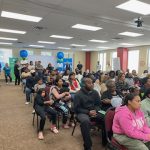
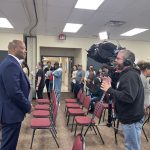
Today the African American Coalition of Indianapolis (AACI) hosted a press conference to address the concerns around the current legislation that could impact IPS schools.

AACI is a coalition of faith-based, civil rights, and community organizations that engage in policy and community concerns. We have not felt there has been any open discussions on those impacts, sharing of resources, and next steps.

Below are several questions that we feel the community needs answers to support IPS on our shared goals for quality education for all students in the IPS school district.

We are interested in your insights on the following questions and would appreciate a response by February 14, preferably in a public forum that we are happy to host. We want to emphasize this is in the spirit of community collaboration and transparency given that these conversations too often happen behind closed doors.

AACI Members In attendance

National Coalition of Black Women

Indianapolis Urban League

Great Indianapolis NAACP Chapter

Fathers and Family

You can watch the press conference on the AACI Facebook page:

https://link.edgepilot.com/s/8036930d/iR6e_Hi98UeLdQ9YxmDrrw?u=https://www.facebook.com/share/v/18Rw4cv5Bp/?mibextid=wwXIfr

Below is the press release issued for the AACI Press Conference hosted today (January 23, 2025) at the Indianapolis, Urban League.

African American Coalition of Indianapolis Press Conference with Questions for IPS Board of Commissioners on Legislation Concerning IPS

Indianapolis, IN (Thursday 23, 2025) – The African American Coalition of Indianapolis (AACI) is requesting a response from the Indianapolis Public School (IPS) Board of Commissioners on the critical questions surrounding legislation impacting the services of the public school organization.

Currently, the board has not addressed community concerns around the financial impacts of these bills if they move forward at the statehouse.

The AACI is a pillar in the community with a collective of over 20 civic-minded organizations that prioritize these key questions, provide comprehensive information to the community, and lead communication with legislatures. Join AACI members and other concerned community leaders for this emergency press conference.

  1. How will sharing funding with unaffiliated charter schools impact IPS’s traditional school operations, transportation, and support for its innovation schools?
  2. How does the presence of 11 charter school authorizers impact IPS?
  3. How does IPS currently support charter schools in the district?
  4. SB 518 would require the sharing of property tax dollars collected after a referendum. Given the frequent closing of charter schools will IPS request the ability to claw back tax dollars from closed charter schools?
  5. How do HB 1136, HB 1501, and SB 518 work to ensure all students in IPS, in the IPS boundary, and Indianapolis are served well?
  6. Who from our community is supporting these legislative efforts and why hasn’t our community been engaged to help find solutions instead of, once again, actions being done to us and not with us?
  7. Ultimately, who benefits and who is burdened by these policies?

The Indianapolis Urban League Stands with the National Urban League in the Fight for Racial Equity in Indiana and Nationwide!”

Nul Logo

“The Indianapolis Urban League Stands with the

National Urban League

in the Fight for Racial Equity in Indiana and Nationwide!”


NATIONAL URBAN LEAGUE:

REVERSING RACIAL EQUITY ORDER IS A MOCKERY OF MLK’S LEGACY

Civil & Human Rights Leaders Gather Wednesday to Plan Policy Response

NEW YORK (January 20, 2025) — National Urban League President and CEO Marc H. Morial issued the following statement in response to the reversal of President Biden’s executive order on racial equity on MLK Day:
“Four years ago, President Biden ushered in the most equity-focused presidential administration in U.S. history. Today begins the modern era’s most aggressive effort to erase racial progress and reinforce white advantage.

“That President Biden’s executive order on racial equity should be reversed on Martin Luther King Day goes beyond cruel irony. It is a deliberate mockery of the principles Dr. King championed and the hope that this day represents for millions of Americans.

“The National Urban Leage and other civil and human rights leaders will gather in Washington, D.C. on Wednesday for the Demand Diversity Roundtable, to strategize a robust, unified response to the oncoming attacks on diversity and equity.

“The National Urban League remains committed to the ideals of diversity, equity, and inclusion. We will not be deterred or discouraged, and we stand ready to defend these ideals whenever they are threatened.”

Indianapolis Urban League Joins Forces to Protect Traditional Public Schools

INDIANAPOLIS URBAN LEAGUE

JOINS FORCES TO PROTECT

TRADITIONAL PUBLIC SCHOOLS

Indiana Educational Equity Coalition

January 13, 2025

Dear Members of the Indiana General Assembly:

We write to you as a diverse coalition in our strong opposition to House Bill 1136. Our coalition represents a broad group across the state, including educational leaders, clergy, numerous nonprofit organizations, community members and leaders, and public education advocates. While we are dedicated to advancing practical solutions in the best interests of our children, HB 1136 is not one of them. It is a misguided proposal that will destabilize schools, silence communities, and jeopardize the future of public education in Indiana.

This bill dissolves several of the state’s largest public school districts, setting up new and separate school boards under an entirely reimagined set of rules and structures. Proposals like this continue to chip away at the traditional public school system guaranteed under the state constitution and serve over 90 percent of Hoosier kids.

Numerous additional school districts could be at risk at any point in the future should enrollment numbers shift. HB 1136 is the latest iteration of the constantly changing school governance models, which are brought forth under the guise of innovation but are not in the best interest of the children or communities they impact. Session after session, our children are the subject of unproven experimental policies that threaten the one vehicle for economic advancement – education.

Impact on Students

HB 1136 would disrupt classrooms, cut critical support services, and, most importantly, disrupt families. Students with disabilities, English language learners, and those who rely on free and reduced lunch programs would be disproportionately affected, as the schools they depend on are dismantled with no clear vision of how these actions will affect each of these communities. Our students deserve stable, well-resourced schools that meet their unique needs—not an unproven charter experiment.

Equity Concerns

HB 1136 unfairly targets high poverty districts and disproportionately affects African American students and other students of color. These communities have long faced systemic challenges, including underfunding and poverty—challenges that this bill ignores. Instead of addressing the root causes of educational inequities, HB 1136 further marginalizes districts that have faced ongoing social and economic challenges, further deepening disparities and undermining efforts to build an educational system that positively impacts all students equally.

This further outsources Hoosier tax money to fund private and frequently out-of-state charter companies that seek profit on the backs of Hoosier kids. We often hear charter schools are public schools, but the only aspect of them that is truly public is that they are taxpayer-funded. It stops there.

Much like the failed State Board of Education takeover that was scaled back and repealed just a few years ago, our concern is that after years of disappointing results, our students will be left with no recourse.

Local Control and Community Accountability

HB 1136 strips communities of their ability to govern their schools by eliminating locally elected school boards and replacing them with state-appointed boards. These boards, disconnected from the communities they serve, would have no accountability to parents, educators, or taxpayers. Local school boards are fundamental to ensuring that schools reflect their communities’ unique needs and values. HB 1136 undermines this vital connection, silencing the voices of those who know their students best.

Impact on Educators

HB 1136 creates uncertainty for teachers, threatening their jobs and contracts. By undermining collective bargaining protections, the bill risks destabilizing the teaching profession at a time when Indiana already faces a teacher shortage crisis. Instead of weakening support for teachers, lawmakers should focus on empowering educators whose expertise and dedication are essential to student success. This bill sends a troubling message that teacher voices don’t matter, jeopardizing the people who tirelessly serve our children and strengthen our public schools.

An Unproven and Unsuccessful Model

The state-controlled charter model proposed in HB 1136 has no track record of success in Indiana or elsewhere. Previous state takeovers and charter conversions in districts like Gary and Indianapolis have failed to deliver on their promises, resulting in instability and disruption rather than improvement. And above all, these actions have weakened parents’ voices in the well-being of their students. The legislature has acknowledged these efforts’ failure by repealing the state takeover law, yet HB 1136 doubles down on this failed approach.

Partnering for Public Education Solutions

Indiana’s public schools are the cornerstone of our communities. Instead of dismantling them, we urge lawmakers to work collaboratively with educators, families, community leaders, and our coalition to address the root causes of our schools’ challenges. This includes investing in equitable funding, addressing poverty, and supporting educators and students with the resources they need to thrive. Our coalition is dedicated to serving as a trusted partner in the legislative process, and we stand ready to provide meaningful solutions that focus on student achievement and advancement.

We call on you to reject HB 1136 and stand with the communities, students, and educators who count on you to protect and strengthen public education in Indiana. Public schools belong to the people—not the state—and their future must reflect the will and needs of the communities they serve.

Sincerely,

Members of the Indiana Educational Equity Coalition:

AFT Indiana

African American Coalition of Indianapolis

Anderson Federation of Teachers, AFT Local 219

Association for the Study of African American Life and History, Joseph Taylor Branch

Baptist Minister’s Alliance

Children’s Policy and Law Initiative of Indiana

Concerned Clergy of Indianapolis

Craig Leadership Services

Fort Wayne Urban League

Gary Teacher Union, AFT Local #4

Greater Indianapolis Multifaith Alliance

Indiana Coalition for Youth Justice

Indiana Coalition for Public Education

Indiana Ministerium

Indiana PTA

Indiana State Teachers Association

Indianapolis Education Association

Indianapolis Urban League

MADVoters

Marion County Commission on Youth, Inc.

NAACP Fort Wayne/Allen County Branch #3049

NAACP Gary Indiana Branch 3050-B

NAACP Greater Lafayette Branch #3056

NAACP Greater Terre Haute Branch #3068

NAACP Indiana State Conference

NAACP Richmond Branch #3066

National Council of Negro Women – Indianapolis

University Alliance for Racial Justice

Urban League of Northwest Indiana

CITIZENS ENERGY GROUP  SHARES WINTER ASSISTANCE PROGRAMS IN OUR COMMUNITY

CITIZENS ENERGY GROUP  SHARES

WINTER ASSISTANCE PROGRAMS IN OUR COMMUNITY

Citizens Energy Group is projecting that natural gas heating bills will decrease on average by about $14 for the five-month winter heating season.

Furthermore, Citizens’ average residential natural gas bill consistently ranks among the lowest of the 19 gas utilities operating in the state, according to monthly surveys done by the Indiana Utility Regulatory Commission. However, with many households in Central Indiana facing financial challenges, we remain committed to providing assistance to those in need.

As the cold months set in, I wanted to share some crucial information about various financial assistance programs available to help our residents manage their utility bills this winter.

Citizens Energy Group has compiled comprehensive financial assistance information for the 2024-2025 home-heating season into a single document, available in nine languages, which can be accessed here. We also offer flexible payment arrangements, budget billing, and energy efficiency programs to help manage utility bills. For more information, please visit our website or call 317-924-3311.

Financial assistance options include Indiana’s Low-Income Home Energy Assistance Program (LIHEAP or EAP), which is now accepting applications and provides essential support for those struggling with utility bills. This program is often the best first step for residents seeking assistance. Please note that this season, the application period will close earlier than usual, on April 14, 2025.

While the EAP application review process can take several weeks, approval leads to financial assistance for natural gas and electric bills, as well as temporary protection from utility disconnection for non-payment. Additionally, Citizens customers who qualify for EAP will automatically receive a 10 to 25 percent discount on natural gas bills and a wastewater bill credit ranging from $6 to $15.

For Marion County residents who do not qualify for EAP but still need help with their utility bills, the United Way of Central Indiana’s Winter Assistance Fund (WAF) is available. The application period for WAF begins on January 1, 2025. Applications can be found here or by calling 2-1-1.

Additionally, Citizens Energy Group’s Warm Heart Warm Home Foundation™ provides financial grants, utility line/appliance repair and/or replacement, energy management education, and case management to individuals and families throughout the greater Indianapolis metropolitan area experiencing short- and long-term economic hardship. Those needing assistance, as well as those interested in supporting the Foundation, can learn more here.

We kindly ask for your support in spreading the word about these valuable resources to ensure that all eligible residents can benefit from the assistance available. Your leadership and outreach are vital in helping our community stay warm and safe this winter.

Thank you for your continued dedication and support.

Warm regards,

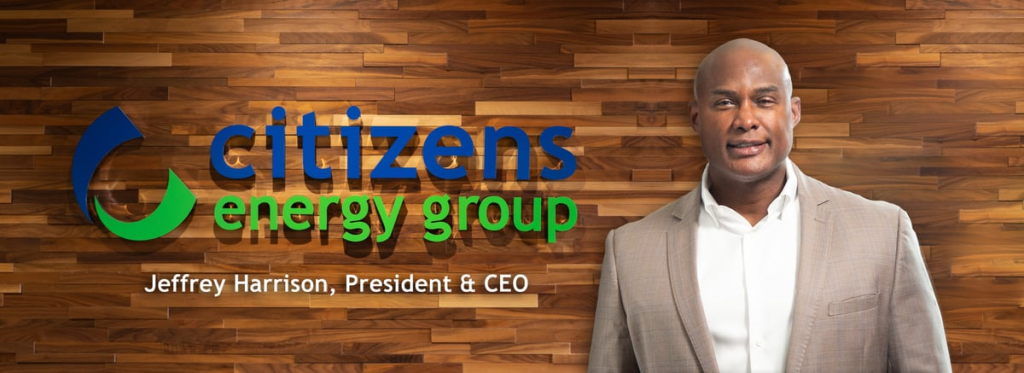
Jeffrey Harrison, President & CEO, Citizens Energy Group

NATIONAL URBAN LEAGUE: SUPREME COURT RULING VIOLATES FEDERAL LAW; VOTERS REMINDED TO CHECK REGISTRATION

Nul Logo

NATIONAL URBAN LEAGUE:

SUPREME COURT RULING VIOLATES FEDERAL LAW;

VOTERS REMINDED TO CHECK REGISTRATION

NEW YORK (October 31, 2024) — National Urban League President and CEO Marc H. Morial issued the following statement in response to the Supreme Court’s decision to allow voter purges to resume in Virginia:

“The extremists on the Supreme Court escalated their attacks on voting rights by allowing Virginia Governor Glenn Youngkin to remove registered voters from the voter rolls in clear violation of the 1993 National Voter Registration Act.  This is yet another ruling by the Court that ignores established federal law in favor of blatant partisan attempts to keep our communities from voting. We have already seen this same outrageous tactic in Alabama and Texas where so-called ‘election integrity’ measures are being used to disenfranchise voters of color and other marginalized citizens.

“The National Urban League movement will not be deterred by these attacks. Our Reclaim Your Vote campaign has already engaged and registered thousands of voters across the country and will continue fighting to ensure our voices are heard in every community. We encourage all voters to check their voter registration status and make a plan to vote on or before Election Day. Virginia is one of 21 states where same day voter registration is available. To check your registration status and make sure your vote is counted at the ballot box, visit https://link.edgepilot.com/s/d3500abc/YQ-2_zy-10e6F-1cwPjFcQ?u=http://www.reclaimyourvote.org/.

“In the event of any type of intimidation, voter suppression, or any other issues trying to vote, remain at the polling place and call the election protection hotline 1(866) OUR-VOTE for instructions on next steps. Stay and Reclaim Your Vote!”

AT&T & Human-I-T Provide 250 Laptops and Backpacks to Indianapolis Families to Help Close the Digital Divide  

Iul Logo Nul

INDIANAPOLIS, October 9, 2024

 AT&T & Human-I-T Provide 250 Laptops and Backpacks to Indianapolis Families to Help Close the Digital Divide  

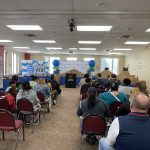
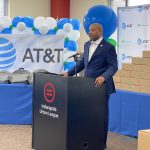
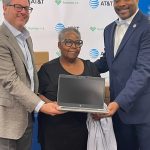
 As part of AT&T’s Connected Learning® initiative, nearly 250 Indianapolis students and families received free laptops and backpacks filled with school supplies today, thanks to AT&T*, Human-I-T, and the Indianapolis Urban League.

AT&T and Human-I-T provided the 250 refurbished laptops to preselected Indianapolis residents during an event at the Indianapolis Urban League – the site of an AT&T Connected Learning Center.

Families also received a new backpack filled with school supplies. The backpacks were assembled by AT&T employee volunteers as part of a national effort to bridge the digital divide and equip 20,000 students across the country with laptops and backpacks this fall.

“These laptops will be a game-changer for these Indianapolis families,” said Bill Soards, President, AT&T Indiana. “Connectivity has become a key to nearly every door of opportunity, but millions of Americans still don’t have access to technology or high-speed internet. We’re excited to help connect these families to new opportunities in our digital world, thanks to our collaboration with Human-I-T and the Indianapolis Urban League.”

In Indiana, it’s estimated that 13% of households don’t have access to the internet or connected devices at home that are needed to fully participate in the online world – an issue known as the digital divide.

“We appreciate the opportunity to embark on this latest collaboration with AT&T, a longtime supporter, in transforming lives for multiple generations through ownership of a laptop,” said Tony Mason, President & CEO, Indianapolis Urban League. “Owning a personal laptop, with Microsoft Office software for digital learning, will increase the digital literacy skills of our youth and adults, provide accessibility to apply for jobs and colleges, online banking, healthcare and school portals, and email – all with secure 24/7 access removing the barriers of library hours and restricted use of school and work-issued devices.”

Recipients of laptops will now have access to job search, obtain employment, receive telehealth services, connect with family and resources, and build the skills they need to thrive and succeed in life.

This is the second major donation of laptops to Indianapolis families and students this year. In April, AT&T and Human-I-T joined together to distribute 300 free laptops to students and families served by Indianapolis Public Schools and Indiana Youth Group to help bridge the digital divide.

It’s all part of the AT&T Connected Learning® initiative to help address the digital divide through internet accessibility, affordability and safe adoption. AT&T is committing $5 billion to help 25 million people get and stay connected to affordable, high-speed internet by 2030.

Today’s event was part of a series of AT&T and Human-I-T laptop distributions being held throughout the year in communities across the country.

“Human-I-T and the Indianapolis Urban League are united by a shared mission: to empower underserved communities through access and opportunity,” said Gabe Middleton, CEO, Human-I-T. “Our focus is on closing the digital divide by connecting individuals to the technology they need to thrive, while the Urban League builds bridges through strategic partnerships to uplift those in need. Together with AT&T, we’re creating a powerful alliance that will transform lives, support families, and strengthen the fabric of this community.”

Learn morea bout the AT&T Connected Learning Center at att.com/connectedlearning

View the full story at WISH-TV, click here

 AT&T & Human I-T Laptop and Backpack Event Photos

Gleaners Announces “Huddle Against Hunger”

“We are proud to stand with Gleaners to help Hoosiers in our community faced with the challenges of food insecurity and living in food deserts”, Indianapolis Urban League President and CEO, Tony Mason, and honorary event chair for “Huddle Against Hunger”.

Indianapolis, October 4, 2024 – Gleaners Food Bank of Indiana announced today its new, exciting annual fundraising event, Gleaners Huddle Against Hunger, presented by the Indianapolis Colts. The event will be held on the field of Lucas Oil Stadium on Tuesday evening, October 15, 2024. All net proceeds will go directly and solely to Gleaners Food Acquisition Fund to acquire food for Hoosiers facing hunger in Gleaners’ 21-county service area in central and south-central Indiana.

The needs of people facing hunger are surging to well-above the record levels during the pandemic. As a result, Gleaners now must purchase nearly half of all food it provides people facing hunger, pushing its food acquisition budget from $2 million in 2019 to $7.7 million this year. Gleaners can buy about nine times what a dollar buys at a grocery store, and every dollar Gleaners receives can provide up to eight meals to people facing hunger.

“This event will be a unique opportunity to highlight the successful efforts being undertaken to fight hunger in our community and raise much-needed funds that will go directly to purchasing nutritious, high-quality food for our food-insecure neighbors,” said Fred Glass, President and CEO of Gleaners.

“As food insecurity and food deserts continue to be a challenge in our communities, organizations like Gleaners need our support more than ever before,” said Colts Owner & CEO Jim Irsay, an Honorary Chair for the event. “The Colts and Gleaners have a long history of partnership, and now we’re honored to join together again to raise vital funding to feed our friends, fans, and neighbors in need.”

Guests will enjoy an action-packed, gameday-like atmosphere with complimentary food and beverage, free parking, on-field activities, historic memorabilia from The Jim Irsay Collection, and engagement with the Indianapolis Colts. Premium sponsors and their guests will have a Colts Locker Room experience prior to the main event.

Will you join us in supporting this new and exciting annual fundraiser?

A limited number of general admission tickets will be available for the main event.

Some sponsorship opportunities also remain available. Contact glowry@gleaners.org for more information.

Honorary Event Chairs: Joe Breen (RMA Advisors), Andy Crask (Bank of America), Geordan Coleman (Bank of America), Scott Davison (OneAmerica Financial), Erin Dorsey (Dorsey Foundation), Gary Edwards (DEEM), Laura and Tony George, Jim Irsay (Indianapolis Colts), Colleen Juergensen (Kroger), Milele Kennedy (Gennesaret Free Clinic), Katie and Morgan Lucas (Lucas Oil), Joy Mason (Optimist Business Solutions) and Tony Mason (Indianapolis Urban League), Jackie Morris, Sara Fehsenfeld Morris (The Heritage Group), Dennis Murphy (IU Health), Bill Shrewsberry (Shrewsberry & Associates LLC), Jeff Simmons (Elanco), Jeff Smulyan (Emmis Communications), John Thompson (Thompson Distribution Co. Inc), Cassidy and Dan Towriss (Group1001), Roberta and Bill Witchger (Marian Inc.).

A limited number of general admission tickets will be available for the main event. Some sponsorship opportunities also remain available. Contact glowry@gleaners.org for more information.

About Gleaners Food Bank of Indiana, Inc.
Gleaners was founded in 1980 and is a respected leader within Feeding America, the nation’s food bank network. Since that
time, Gleaners has distributed nearly one billion pounds of food and critical grocery products through a network of three
hundred hunger relief agencies, schools and community partners serving Hoosiers facing food insecurity. In addition to food
distribution to agencies, we serve our most vulnerable populations, seniors, and children, through specialty programs such as
Gleaners2Go, Home Delivery, School-Based Pantries, and Mobile Pantries. Comprehensive outreach services (SNAP, Medicaid,
utility assistance, and more) and wrap-around services from collaborative partners are offered to help reduce the line.